2026-09-14 · Erik Nelson
What Affects Furnace Installation Costs in Remote Alaska Homes
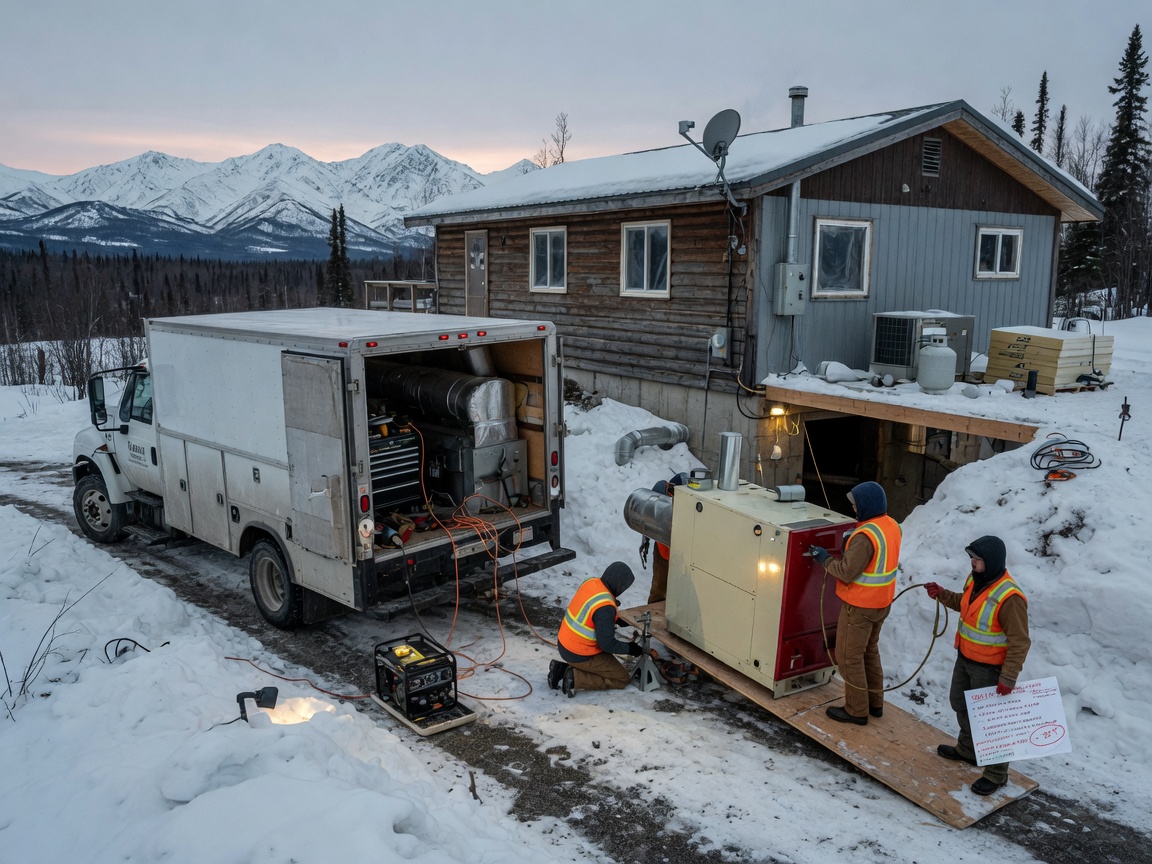
Furnace installation costs in remote Alaska homes typically range from several thousand dollars more than urban installs because of added logistics for fuel lines, reinforced venting, and crew travel over long distances on unpaved roads. These premiums arise directly from the need to adapt standard systems to subzero temperatures, limited delivery windows, and the requirement for oversized units that handle rapid heat loss in older, poorly insulated structures common in outlying areas.
Terrain and Site Access Challenges
Remote properties in the Vail area, such as those along Cienega Creek, often sit on uneven ground with narrow access roads that complicate equipment delivery. Crews must sometimes use smaller trucks or even ATVs to reach sites, adding time and labor. In winter, frozen ground and snow drifts further restrict movement, forcing installers to stage materials days ahead. Homeowners in Rincon Valley frequently face similar constraints where steep driveways require extra rigging for furnace units weighing several hundred pounds. These access realities directly increase project duration and the number of workers needed on site.
Climate Demands and System Sizing
Alaska's prolonged subzero periods demand furnaces with higher BTU output and better cold-weather components than milder regions. In Vail's own winter stretches, systems must maintain steady output when overnight lows drop sharply, which means selecting models with robust heat exchangers and variable-speed blowers. Poor sizing leads to short cycling and higher long-term fuel use. Installers often calculate loads room-by-room rather than using rule-of-thumb estimates because remote homes vary widely in insulation quality and square footage. Linking to resources like Signs Your Furnace Needs Repair in Vail's Subzero Winters helps owners recognize when an existing unit is undersized before replacement becomes urgent.
Transportation and Supply Logistics
Delivering furnaces and duct components to remote Alaska locations involves freight costs that can exceed standard delivery fees by a wide margin. Parts must often travel via barge or winter road convoys, and any back-order delay extends the project window. In the Vail area, similar challenges appear when serving homes in Cienega Creek / Cienega Preserve Area where suppliers are farther away. Installers plan around seasonal road restrictions and keep common components on hand at the shop located at 13190 E Colossal Cave Rd Ste 120A. This preparation reduces downtime once work begins but still factors into the overall quote.
Housing Age and Ductwork Modifications
Many remote homes in Alaska were built decades ago with single-wall ducting or inadequate returns that must be upgraded during furnace replacement. In Vail's older neighborhoods such as Sierra Morado, crews routinely discover undersized returns or deteriorated flex duct that raises installation time. Upgrading these elements ensures the new furnace operates at rated efficiency and prevents callbacks. Homeowners benefit from scheduling a pre-install inspection that includes static pressure testing so the final scope accurately reflects needed modifications rather than surprises on installation day.
Maintenance Planning After Installation
Once the new furnace is running, ongoing care prevents premature wear in extreme conditions. Scheduling Heating Maintenance visits before the first hard freeze allows technicians to verify combustion efficiency and clean burners exposed to fine dust from rural roads. Owners in remote settings also keep spare filters on site because delivery times lengthen in winter. Checking the related guide How to Check Furnace Filters and Vents Before Freeze-Up provides practical steps that complement professional service and help maintain warranty coverage.